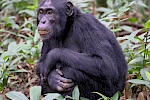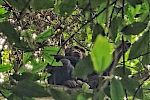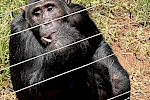
Deep inside Uganda's Kibale National Park, one of the world's largest known communities of wild chimpanzees experienced an extraordinary breakdown of social relationships that eventually led to deadly violence. What began as a gradual separation among familiar individuals developed into a prolonged conflict between two rival groups, with adult chimpanzees and infants becoming victims of repeated attacks.
Often described as the Uganda Chimpanzee Civil War, this remarkable event took place among the Ngogo chimpanzees, a population that scientists have studied for decades. Unlike typical territorial conflicts between neighbouring chimpanzee communities, this conflict involved individuals who had once lived, fed, groomed and cooperated together as members of the same community.
The story gained international attention through Netflix's wildlife documentary Chimp Empire, which offered viewers an extraordinary look into the social lives, leadership struggles and rivalries of these chimpanzees.
The events provide an unusual insight into chimpanzee social behaviour, territorial competition and the fragile relationships that hold large animal communities together.
The conflict happened in Kibale National Park, in western Uganda, particularly within the Ngogo forest area.
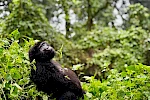
Kibale is one of Africa's most important destinations for chimpanzee tracking. Its tropical rainforest supports a remarkable diversity of primates, birds and other wildlife, including several habituated chimpanzee communities.
The Ngogo chimpanzees became internationally recognised through long-term scientific research and the Netflix documentary Chimp Empire, which introduced audiences to their complex social lives, leadership struggles, alliances and territorial behaviour.
Researchers began continuously observing the Ngogo community in 1995. At the time, it was already unusually large, and its population eventually grew to approximately 200 individuals, including more than 30 adult males.
For many years, the chimpanzees functioned as one community despite having smaller social clusters within the larger population.
Chimp Empire is a four-part Netflix documentary released on 19 April 2023. Directed by James Reed, known for the Oscar-winning documentary My Octopus Teacher, and narrated by Mahershala Ali, the series was filmed over approximately 18 months in Kibale National Park, Uganda.
The documentary follows the lives of the Ngogo chimpanzees, revealing a remarkably sophisticated animal society shaped by family relationships, friendships, dominance struggles, political alliances and territorial rivalries.
Viewers are introduced to individual chimpanzees, including Jackson, the dominant alpha male, whose leadership faces challenges from rivals. The series also follows the growing tensions between two factions within the community: the Central and Western groups.
One of the most fascinating aspects of Chimp Empire is that the filmmakers captured the community during a historic period of division. As relationships deteriorated, former companions increasingly became rivals, setting the stage for the violent conflict that researchers would continue documenting in subsequent years.
The third episode, titled "War," particularly highlights the growing hostility between the factions and the dangers of their increasingly divided society.
The documentary was released before scientists published their detailed findings on the permanent community split and subsequent lethal attacks. In April 2026, a major study in the journal Science provided further evidence of the extraordinary conflict, documenting years of deadly violence between the former members of the same community.
For viewers who have watched Chimp Empire, visiting Kibale National Park offers an opportunity to experience the real rainforest environment where the documentary was filmed.
Watch the documentary: Chimp Empire on Netflix
The separation did not happen overnight. Researchers observed a gradual deterioration of relationships among members of the Ngogo community.
Around 2015, chimpanzees belonging to different social clusters increasingly began avoiding one another. Individuals that had previously associated peacefully started responding to each other with displays of aggression, threatening calls and territorial behaviour.
The growing tension eventually divided the community into two distinct factions:
The Western group: A smaller faction that became increasingly separated from the rest of the community.
The Central group: The larger faction, which included individuals from the central and eastern social clusters.
By 2017, peaceful interactions between the two factions had effectively ended. They increasingly behaved like neighbouring chimpanzee communities rather than members of the same social group.
By 2018, the division had become permanent, and the first documented lethal attacks followed.
Scientists believe several factors contributed to the breakdown of the once-united community. However, there is no single confirmed explanation for the split.
One of the most important findings was the gradual weakening of relationships between individual chimpanzees.
Grooming, companionship and cooperation are essential parts of chimpanzee social life. As these connections weakened, the different clusters increasingly became socially isolated.
The Ngogo population had grown to approximately 200 individuals, making it one of the largest known wild chimpanzee communities.
Such a large population may have placed additional pressure on social relationships, access to resources and reproductive opportunities.
Changes in dominance and leadership may also have contributed to the growing divisions. The emergence of a new alpha male in 2015 coincided with the period when researchers began observing significant social separation.
The community experienced several significant losses, including the deaths of adult males who had important social connections.
A respiratory disease outbreak in 2017 also killed numerous chimpanzees, potentially accelerating the separation by removing individuals who maintained relationships between the emerging factions.
Researchers consider these factors possible contributors rather than individually proven causes.
The first documented lethal attack following the separation occurred in January 2018.
A young adult male named Erroll, who belonged to the Central group, was attacked by several males from the Western group. He later died from his injuries.
In June 2019, another Central male, Basie, was attacked and killed. What made this incident particularly remarkable was that Basie had previously maintained strong social relationships with several members of the Western faction. He had groomed with them and formed alliances before the community split.
His former relationships offered no protection once the factions became enemies.
These early attacks demonstrated how dramatically the social relationships within the Ngogo community had changed.
The scale of the conflict became clearer through decades of observations analysed by researchers.
A major scientific study published in Science on 9 April 2026 documented 24 attacks by members of the Western group against the Central group over approximately seven years.
The attacks resulted in the deaths of at least:
Seven mature male chimpanzees.
Seventeen infant chimpanzees.
The findings revealed a sustained pattern of lethal aggression between two groups that had previously belonged to the same community.
The smaller Western faction was responsible for the attacks despite being significantly outnumbered by the Central group.
This suggests that group cohesion, cooperation and coordinated aggression can be important factors in chimpanzee territorial conflicts.
Chimpanzees are well known for their territorial aggression. Males sometimes patrol the boundaries of their territories and attack members of neighbouring communities.
However, the Ngogo conflict was unusual because the opposing factions were not originally strangers.
They had shared the same territory, maintained social relationships and cooperated for years before their separation.
Researchers consider this one of the rare documented cases of a permanent community split followed by sustained lethal conflict.
The only previously documented comparable case involved chimpanzees at Gombe in Tanzania during the 1970s, where a community split into two groups and violent attacks followed.
The Ngogo case therefore provides an important opportunity to understand how social divisions can develop into organised violence among our closest living relatives.
Kibale National Park remains one of Uganda's premier destinations for wild chimpanzee tracking.
Visitors can participate in guided chimpanzee tracking experiences, entering the tropical rainforest with experienced guides and trackers to locate habituated chimpanzee communities.
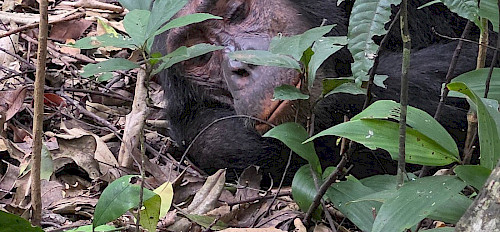
Chimpanzee tracking offers the opportunity to observe these intelligent primates in their natural environment. Depending on the encounter, visitors may see chimpanzees feeding in trees, grooming, playing, communicating through calls, travelling through the forest or interacting with other members of their community.
The Ngogo research area has also attracted interest from wildlife enthusiasts and researchers because of its extraordinary chimpanzee population and long history of scientific observation.
However, seeing the specific individuals involved in the civil war is not guaranteed. Tracking experiences depend on park regulations, access arrangements, chimpanzee movements and the availability of authorised permits.
Fri 06 Nov 2026
Deep inside Uganda's Kibale National Park , one of the world's largest known communities of wild chimpanzees experienced an extraordinary breakdown of social...
More DetailsFri 06 Nov 2026
Uganda is one of East Africa's most rewarding travel destinations, offering mountain gorilla trekking, wildlife safaris, chimpanzee tracking, scenic lakes and...
More DetailsFri 06 Nov 2026
Uganda is a wonderful destination for an African adventure, offering unforgettable gorilla trekking, wildlife safaris, beautiful landscapes and warm...
More DetailsFri 06 Nov 2026
Uganda has removed the Yellow Fever vaccination certificate as a mandatory entry requirement for travelers arriving in the country. According to a notice from...
More DetailsFri 06 Nov 2026
Seeing gorillas in the mist is one of the most extraordinary wildlife experiences in Africa. Deep in the ancient rainforests of East Africa, mountain gorillas...
More DetailsFri 06 Nov 2026
Mafia Island, Tanzania , is one of the most beautiful and peaceful destinations on the Tanzanian coast. Located in the Indian Ocean, south of Zanzibar and off...
More DetailsFri 06 Nov 2026
If you’re planning an adventure in Rwanda, the Congo Nile Trail should be at the top of your list. Although Rwanda is famously known for its gorilla trekking...
More Details